
Goodman Japan Limited
Tsukuba Tech Central
Essential infrastructure for the digital economy, planned together with green space and a disaster-prevention hub open to the community. The official site for sharing information with the community and addressing your questions and concerns about the data centre and logistics development in Oho, Tsukuba.
What is Goodman building?
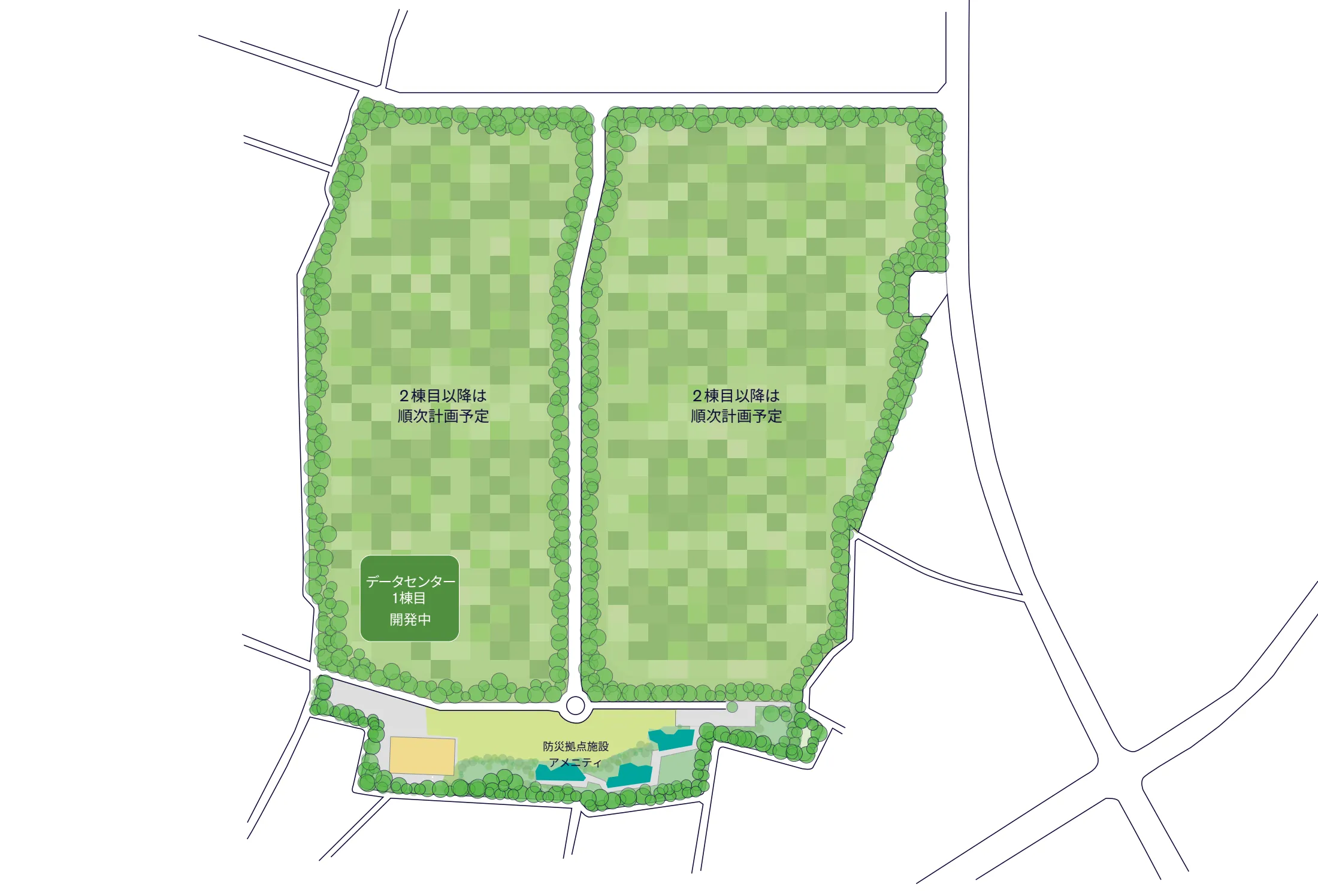
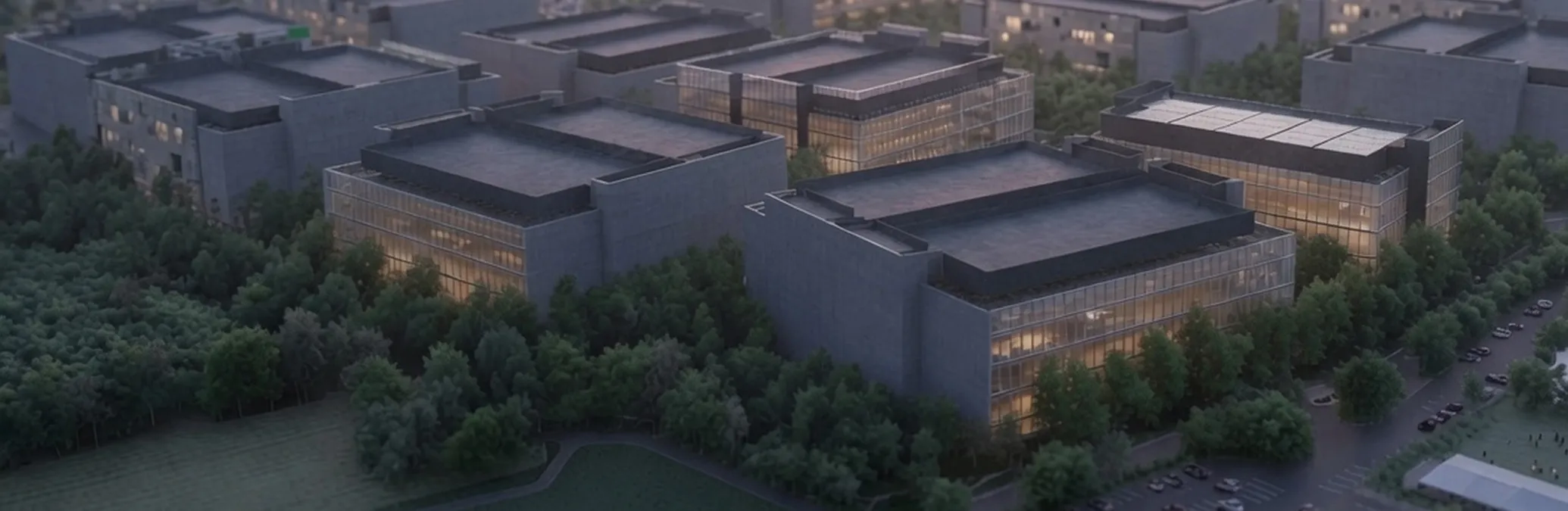
Goodman is developing data centres and logistics facilities in phases at 2-2 Oho, Tsukuba, and, on roughly 45,000 m² at the south of the site, building a disaster-prevention hub, for the City's use free of charge, together with amenities such as cafés and shops.
- Site of roughly 45 hectares, acquired in 2022
- Development proceeds in stages, evolving alongside society and technology. The first building, a data centre, is under way and due to be operational in early 2028
- Green-space and environmental specialists advise on the project, with richly planted areas throughout the site
- Building exteriors designed in harmony with the surroundings, in keeping with Tsukuba's identity as a carefully planned, forward-looking city
What the community gains
The development contributes to community life and the local economy in a range of ways.
Tax revenue & public services
Property tax and other revenues support Tsukuba's public services.
Jobs
Phased construction engages local builders and trades; once operating, the campus creates skilled local jobs in operations, maintenance and security, with further jobs among the businesses that serve the campus and the people working there.
Local procurement
Materials and services are sourced with local businesses wherever possible, supporting the regional economy.
Disaster resilience
A ~45,000 m² disaster-prevention hub and square, with a disaster stockpile warehouse, a dedicated well for the hub, and a multi-purpose square, for the City’s use free of charge.
Everyday enjoyment
Cafés, shops, restaurants and event space, with markets and seasonal events that bring people together.
In line with national resilience policy
Distributing data infrastructure across the regions is national disaster policy, and this development sits squarely within it.
A natural fit for Tsukuba, the science city
Home to some 150 research institutes and 20,000 researchers, Tsukuba gains the leading-edge digital infrastructure that daily life and research both run on.
Ripple effects
Goodman developments have catalysed new shops, housing and vitality around them, along with higher municipal revenues. In Inzai, Chiba Prefecture, reported growth in tax revenue from businesses locating there has helped the city expand its support for families raising children.
Questions? Talk to us
Can't find what you're looking for on this page? Reach us by phone or via the contact page, and we'll be happy to help.
Green spaces & the disaster-prevention hub
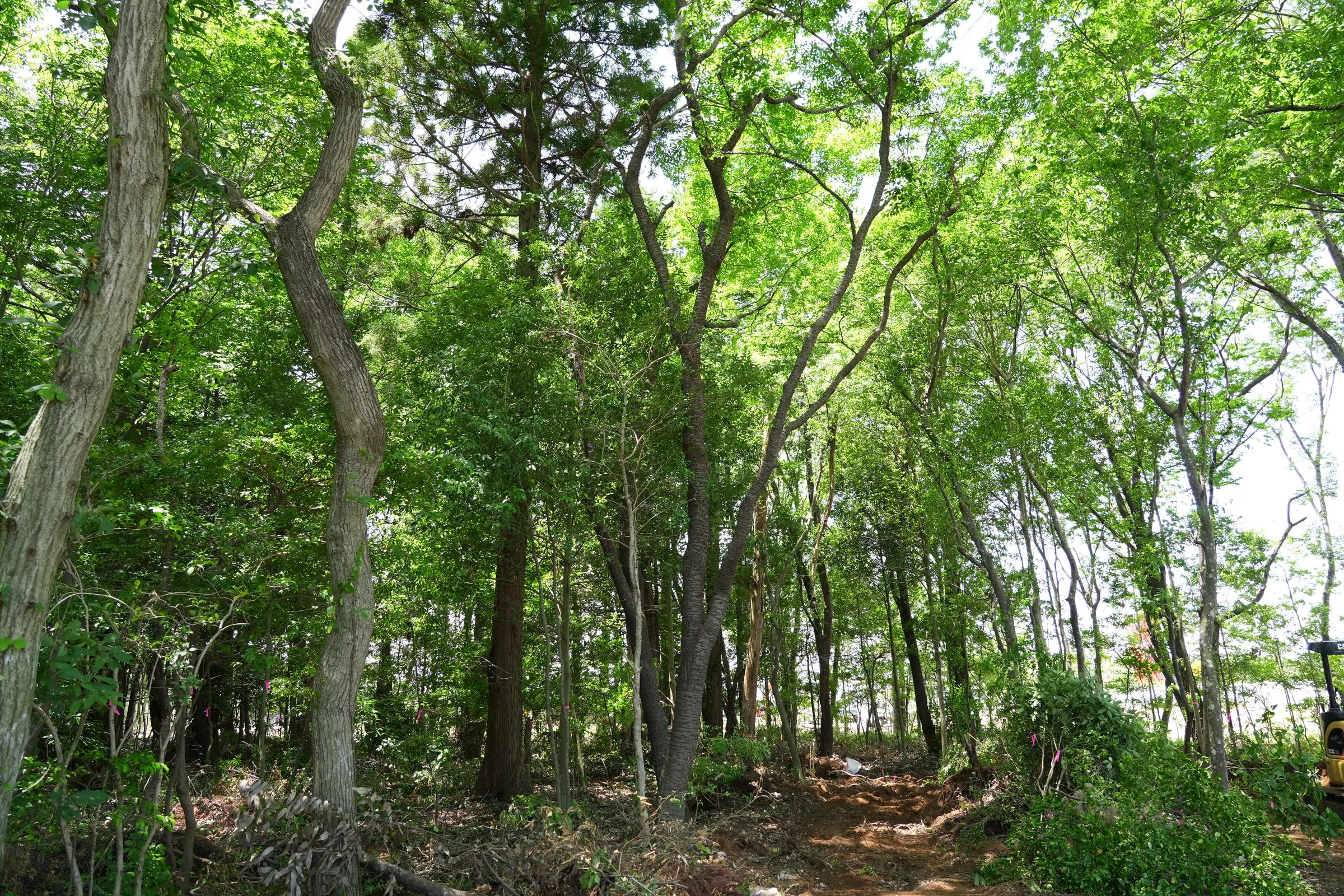
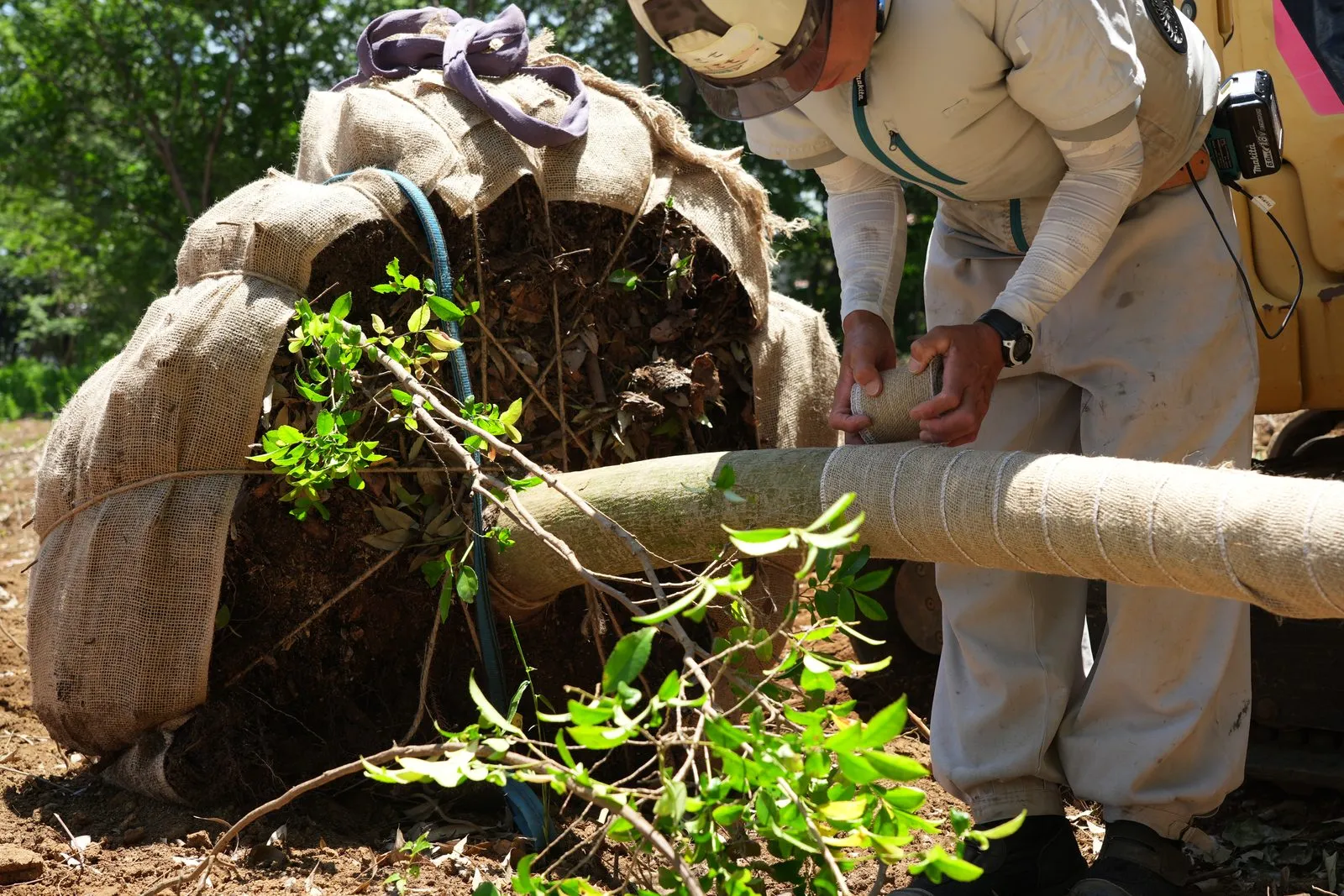
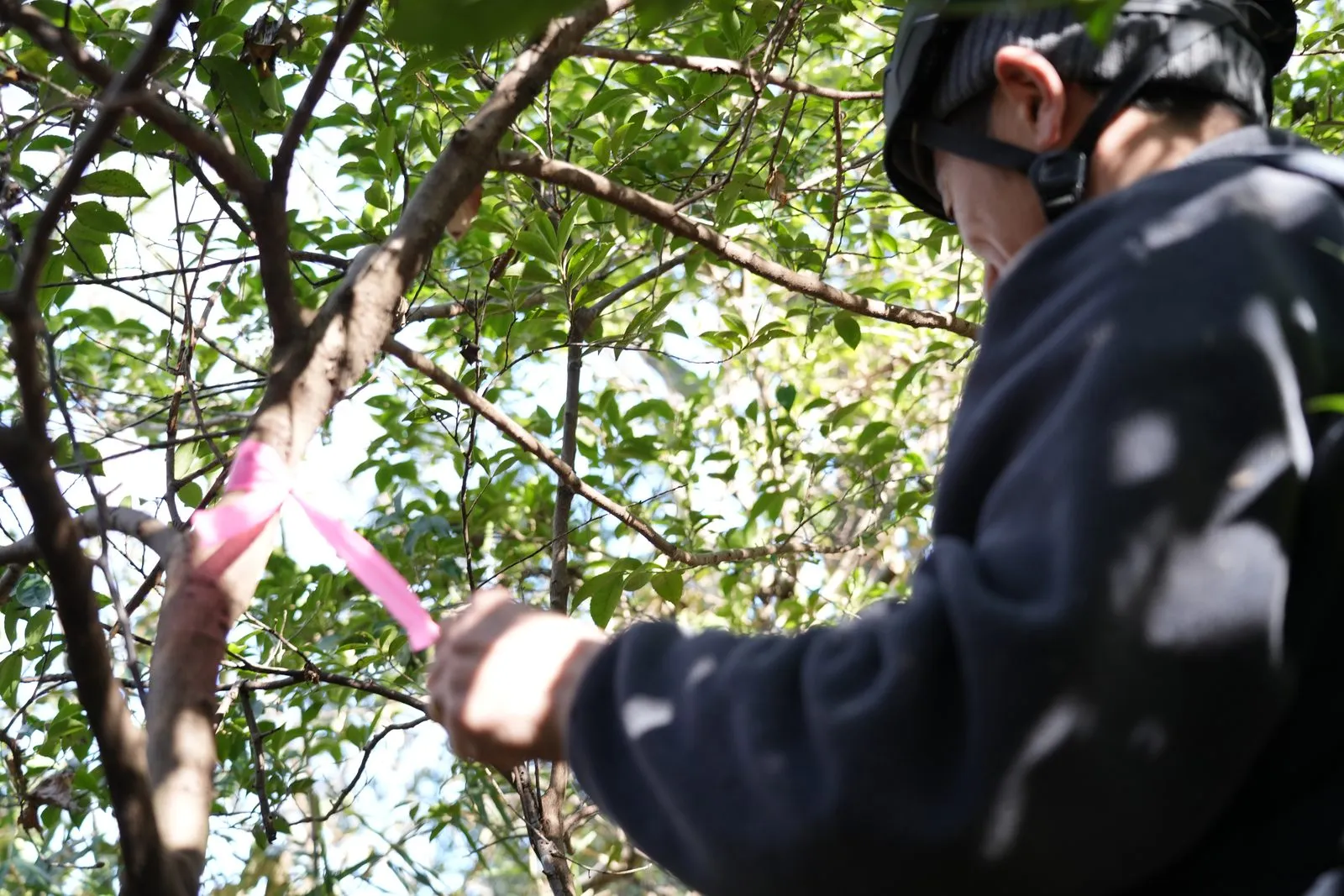
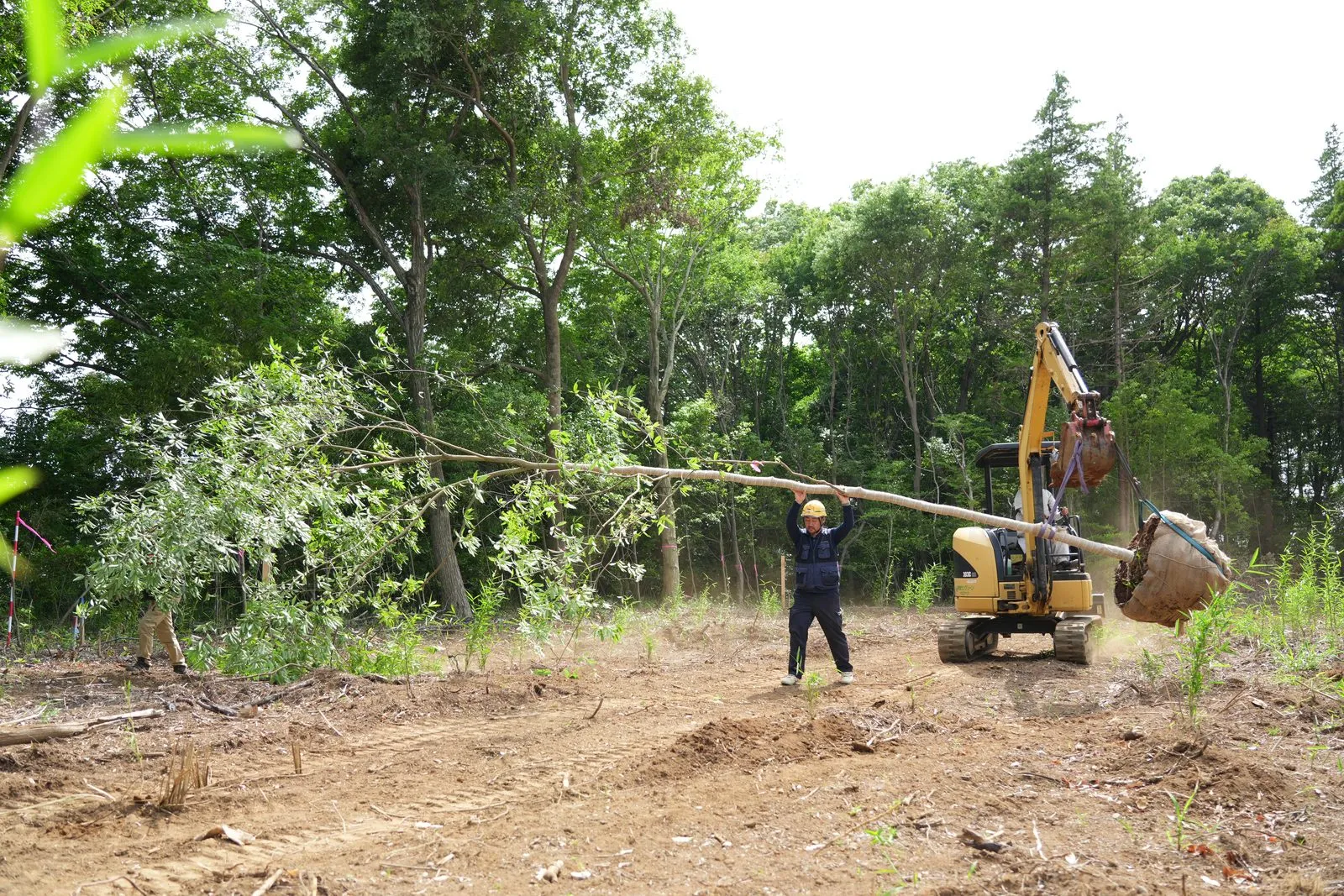
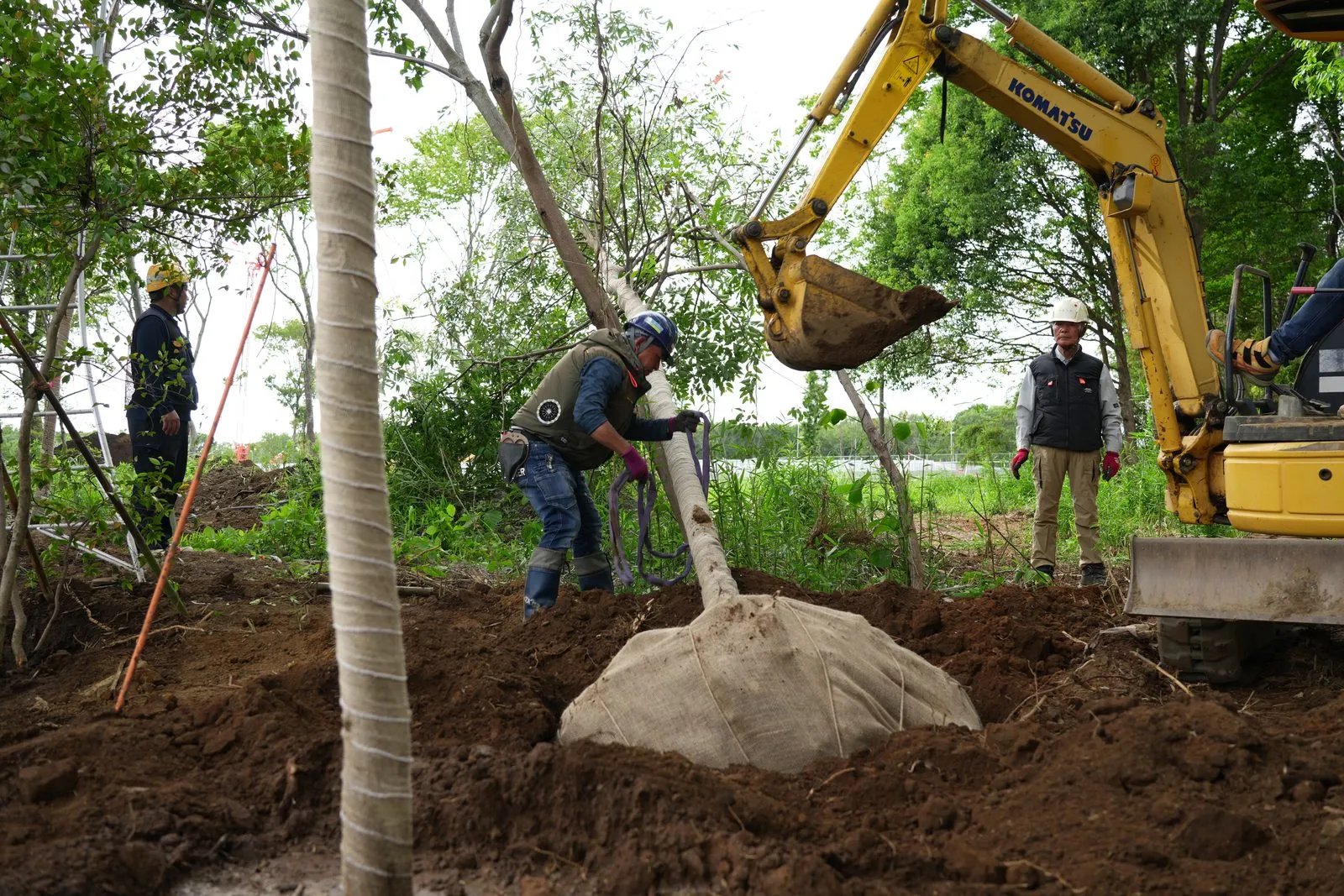
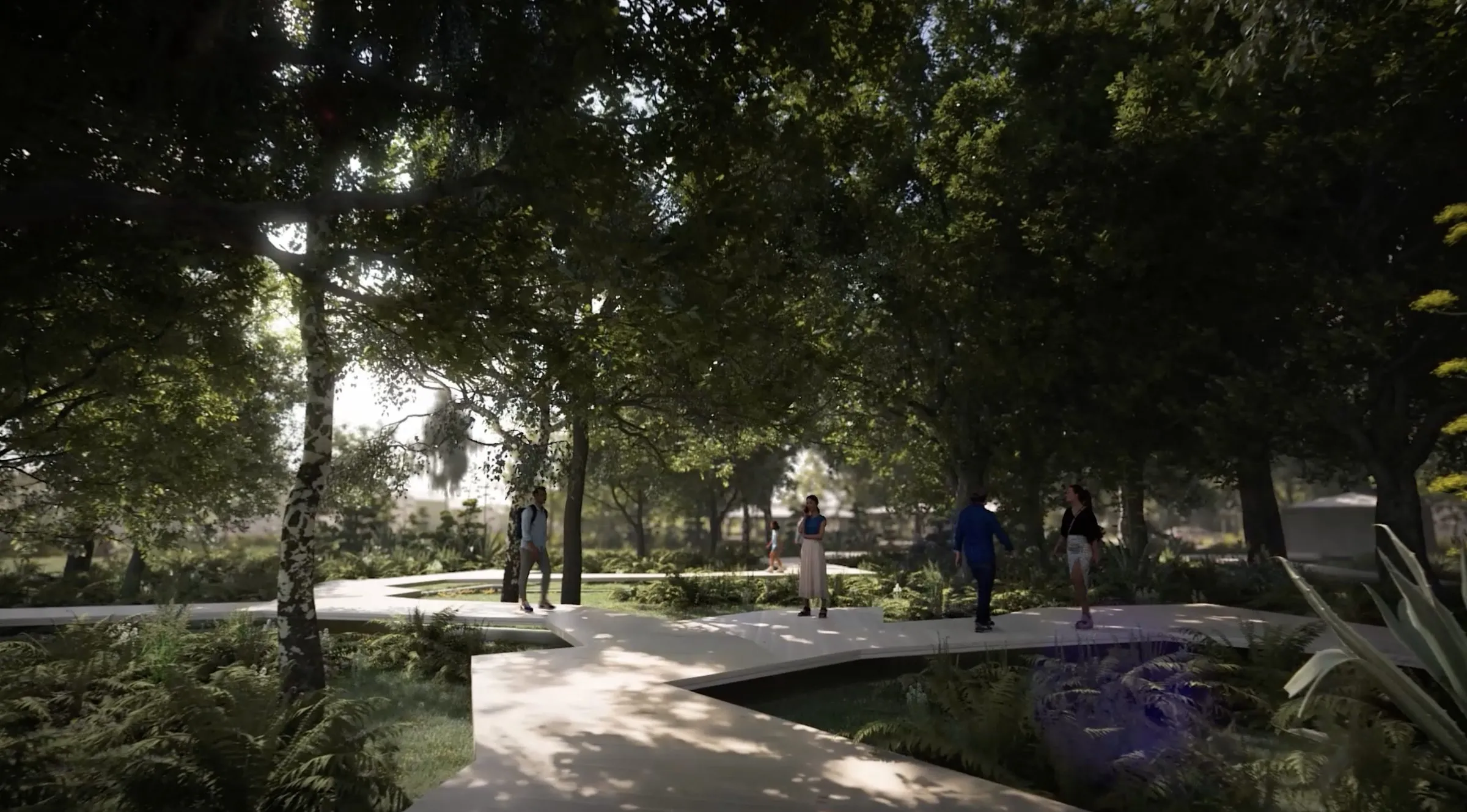
Existing trees are preserved wherever possible and transplanted within the site. Trees damaged by pests or at risk of falling are removed so the woodland stays healthy, and new trees will be planted around the perimeter and along the internal roads.
The disaster-prevention hub & amenities
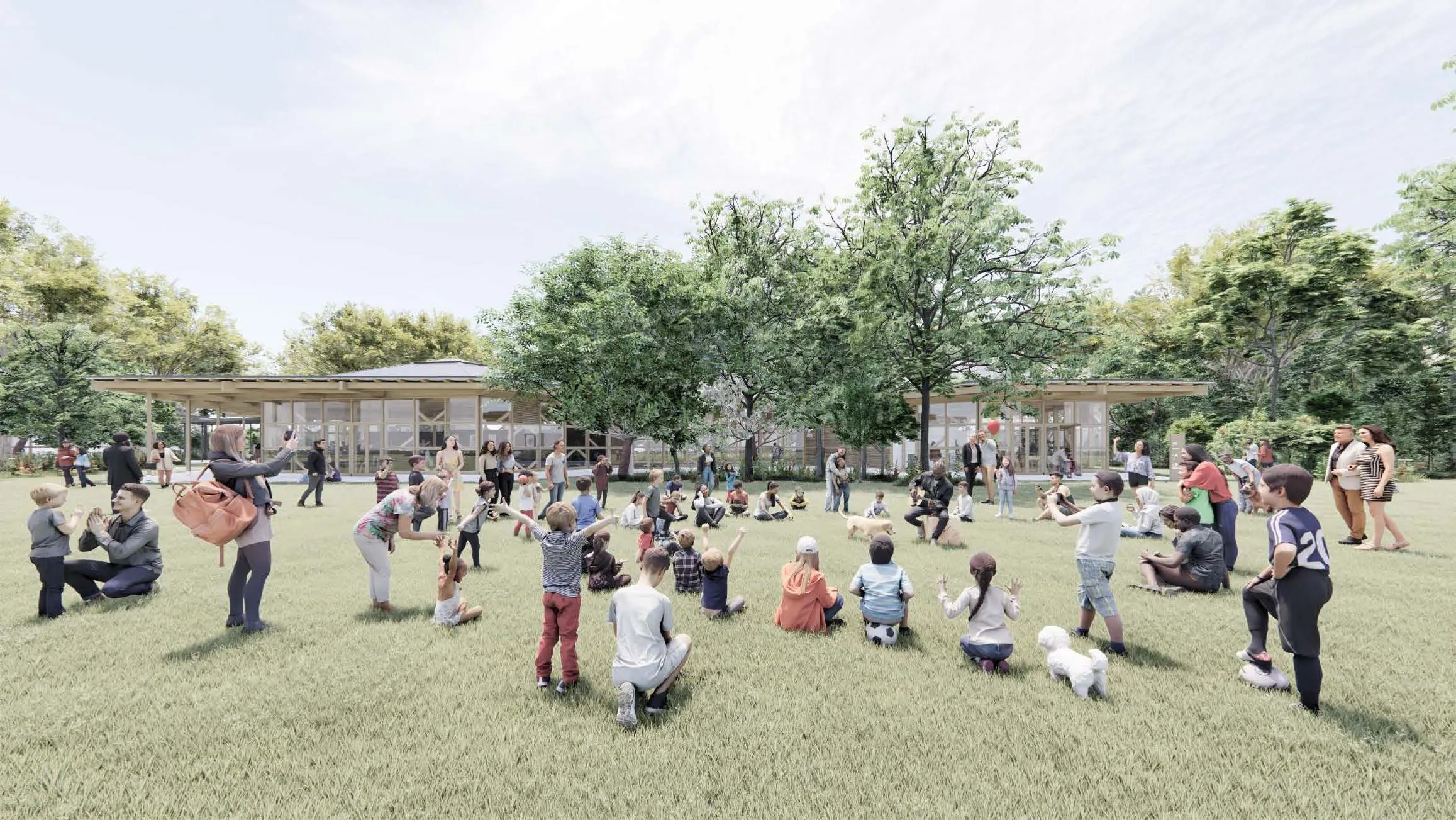
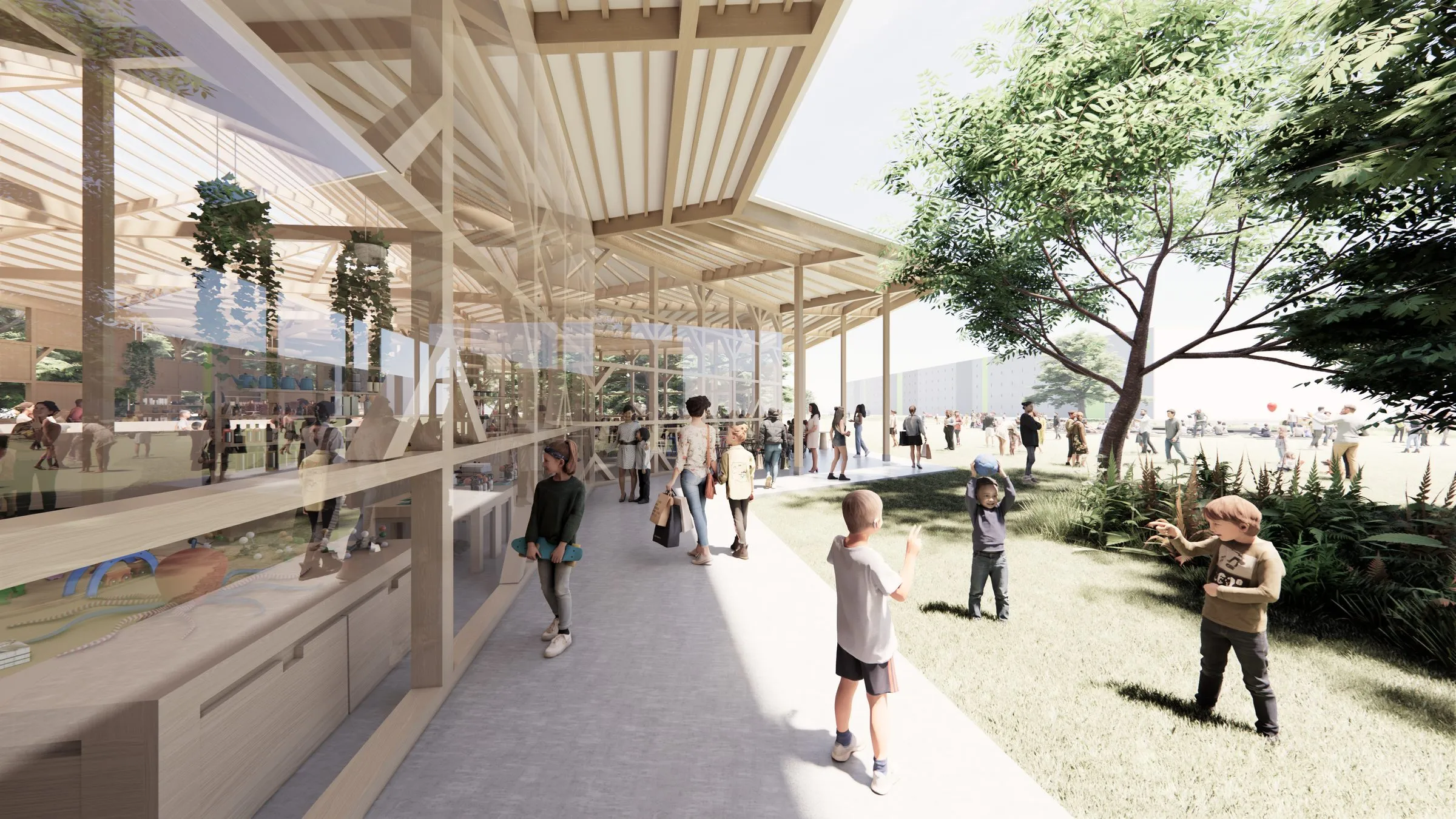
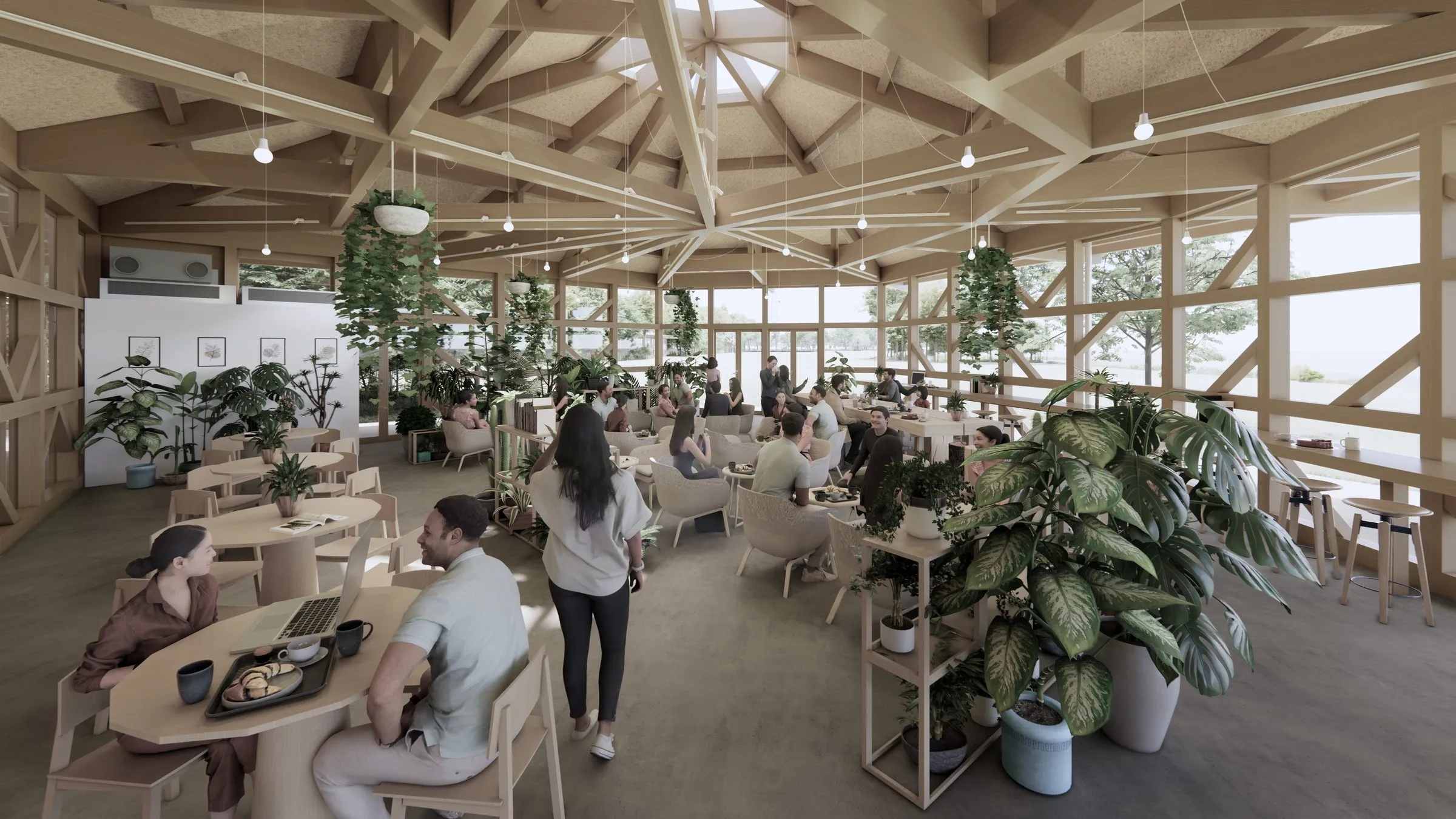
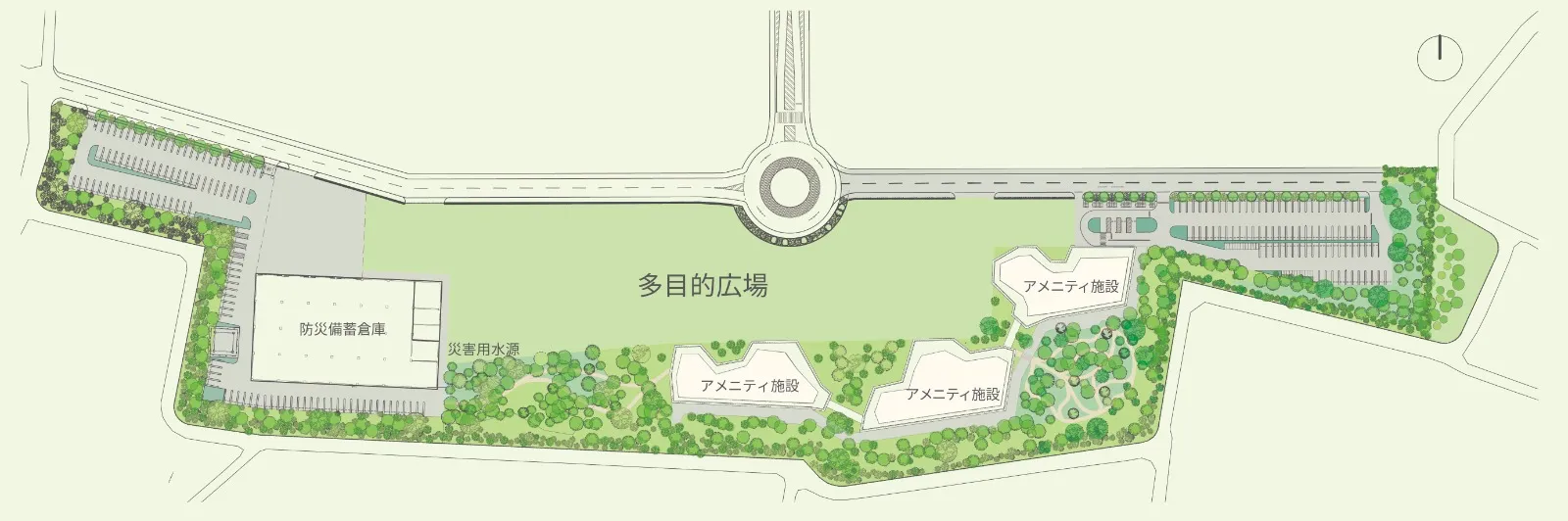
On roughly 45,000 m² at the south of the site (about the size of Tokyo Dome), a disaster-prevention hub and amenity buildings will be developed with the city, with the hub for the City’s use free of charge. Day to day, it will be open to everyone as a place of everyday relaxation, like a park; in a disaster, it will serve the community when it is needed most. An agreement with the city on disaster-time use is under discussion.
The design is by Tezuka Architects, winners of the UNESCO-backed Global Award for Sustainable Architecture. Alongside a natural woodland area and a broad multi-purpose square, we are considering introducing cafés, shops, restaurants and event space, drawing on our experience at theGreen in Inzai.
Your questions, answered
Goodman's answers to the questions we've received from the community, collected in one place.
Answers are updated as the study and discussions progress. Each answer can be shared directly by its link.
Concerns about data centres
“Data centres generate noise.” Noise-generating plant is installed inside acoustically insulated buildings or fitted with sound-insulation measures, and the emergency generators are indoors.
Noise laws and standards continue to apply once the facility operates. Noise-generating plant is installed inside acoustically insulated buildings or fitted with sound-insulation measures, and the emergency generators are installed indoors. Silencers, acoustic louvres and low-noise fans are built into the design to meet the standards. Backup generator test runs happen in daytime only.
“Nearby temperatures will rise.” A specialist study of the heat's impact is under way.
A specialist study of heat rejection is under way. Once it is complete, the findings will be reported to Tsukuba City and summarised here.
We are also exploring ways to put the waste heat to good use locally, including hydroponic vegetable growing, saunas and breweries.
“Construction noise and vibration will be terrible.” Construction follows the Noise Regulation Act and the Vibration Regulation Act, with boundary noise and vibration measured periodically.
Goodman carries out the works under the Noise Regulation Act, the Vibration Regulation Act and Ibaraki Prefecture's living-environment ordinance. Work is in principle carried out in daytime hours, uses low-noise, low-vibration machinery wherever possible, and noise and vibration are measured periodically at the site boundary throughout. Standards are not relaxed because this is a data centre: the same noise and vibration laws, the same daytime-hours restrictions and the same construction-machinery rules that apply to any large building project apply here.
The full list of measures, from the sound-insulating steel hoarding to managed vehicle routes, is under Construction & operation measures. A dedicated contact point handles residents' questions about the works.
“The electromagnetic fields are dangerous.” Measured at an operating data centre, EMF values at every point and frequency sat far below Japan's national guidelines, and data centres do not transmit like a mobile-phone base station.
The relevant electromagnetic field at a facility of this kind is the power-frequency (50 Hz) magnetic field from electrical equipment such as transformers, the same kind of field found near any electrical substation. These fields fall away rapidly with distance, so levels at the site boundary sit far below applicable limits.
Data centres also do not transmit strong radio waves the way a mobile-phone base station does.
With the shielding effect of reinforced-concrete structures and metal cladding, plus the distance from the equipment itself, electromagnetic fields at the site boundary and beyond are at very low levels.
“They drain the town's water supply.” Cooling uses industrial water via a new dedicated supply, never household tap water or groundwater.
The first building is water-cooled. Cooling uses industrial water brought in via a new dedicated supply; no groundwater is used for cooling. Mains water is used only for ordinary building uses such as washrooms. It will not affect household water supply, and will not cause land subsidence from groundwater extraction.
The volume of water discharged is relatively small, and it is never released untreated. Where water is released, its quality is checked and adjusted to meet the required standards first.
“Will household power supply be affected?” A new transmission line, separate from household supply, means household electricity is unaffected.
A new transmission line, separate from household supply, will be built to power the data centre campus, so household electricity supply is unaffected.
We have confirmed in advance that the power company can secure the supply capacity required for this development.
“Low-frequency noise and vibration will carry.” Low-noise, low-vibration equipment and anti-vibration measures are built into the design.
Noise-generating plant is installed inside acoustically insulated buildings or fitted with sound-insulation measures, and low-noise, low-vibration equipment and anti-vibration measures are built into the design.
During construction, noise and vibration are measured periodically at the site boundary. The measurements are taken by specialist measurement firms, not by our own staff. If you have any concerns, please contact the dedicated residents' window.
“The backup generators run all the time.” The only fuel-burning equipment is the backup generators, and they run solely during outages and periodic test runs, in daytime.
There is no equipment on a data centre campus that burns fuel continuously. The only fuel-burning equipment is the backup generators, which run solely during power outages and required periodic testing, with test runs in daytime only.
For the backup generators, we are voluntarily considering measures such as high-performance filtration.
“They give nothing back.” Beyond tax revenue, jobs and local businesses engaged, we build the disaster-prevention hub and amenities: real benefits for the area.
Tax revenue supporting public services, jobs created and local businesses engaged through construction and operations, and a ~45,000 m² disaster-prevention hub and amenities built for the community: the project gives back in many ways.
See What the community gains for the full picture.
Working towards coexistence with the community
Progress is reported on this site and the Environment and legal compliance page.
-
A specialist heat study is being carried out. A summary of the findings will be reported on this site once the study is complete.
A specialist study of heat rejection is under way. Once it is complete, the findings will be reported to Tsukuba City and summarised here.
We are also exploring ways to put the waste heat to good use locally, including hydroponic vegetable growing, saunas and breweries.
-
During construction, boundary noise and vibration are measured periodically, and a dedicated residents' contact point handles any issue with the works. Work is in principle daytime-only with low-noise, low-vibration machinery wherever possible, so contact us about vehicles, noise or anything else.
Goodman carries out the works under the Noise Regulation Act, the Vibration Regulation Act and Ibaraki Prefecture's living-environment ordinance. Work is in principle carried out in daytime hours, uses low-noise, low-vibration machinery wherever possible, and noise and vibration are measured periodically at the site boundary throughout. Standards are not relaxed because this is a data centre: the same noise and vibration laws, the same daytime-hours restrictions and the same construction-machinery rules that apply to any large building project apply here.
The full list of measures, from the sound-insulating steel hoarding to managed vehicle routes, is under Construction & operation measures. A dedicated contact point handles residents' questions about the works.
-
The buildings are designed to exceed Japan's latest energy-efficiency standards. Renewable electricity procurement is also under discussion and under consideration.
Data centres run on electricity, so in normal operation no CO₂ is emitted directly at the Tsukuba campus or in its surroundings, and no thermal power generation will take place on the site or in Tsukuba City.
The buildings are designed to exceed Japan's latest energy-efficiency standards. Alongside that, we are considering pathways to carbon neutrality, including the procurement of renewable electricity.
-
Existing trees are preserved and transplanted wherever possible, with new planting around the site. Soil preparation for roadside planting is underway.
Existing trees with a strong prospect of surviving relocation are preserved and transplanted within the site, and new trees will be planted around the perimeter and along the internal roads. Soil preparation for roadside planting began in August 2026.
The landscaping plan that sets the numbers and species is being finalised. We will publish a summary here once it is confirmed.
The planting schedule is under Green spaces & the disaster-prevention hub.
-
A ~45,000 m² disaster-prevention hub and amenities will be built, and the hub and square are for the City's use free of charge. In normal times it is open to everyone as an everyday place to relax. The disaster stockpile warehouse and multi-purpose square are for the City’s use free of charge; it is planned as a long-term asset for the area.
The disaster stockpile warehouse and multi-purpose square are for the City’s use free of charge; it is planned as a long-term community asset.
The disaster stockpile warehouse and multi-purpose square are leased to the City from spring 2028, and we are targeting the amenity area to open from around summer 2028.
An agreement with Tsukuba City on its use in a disaster is also under discussion.
-
Car parking is provided at the multi-purpose square and amenities so visitors never need to park on nearby roads. Vehicles use the widened prefectural road to the north and the site's internal roads.
Vehicles enter and leave via the widened prefectural road to the north and the new roads inside the site, not through neighbourhood streets, keeping the impact on the surrounding area low.
Car parking is provided at the disaster-prevention hub and amenity area, with enough spaces that visitors do not need to park on nearby roads. Operational details are being settled in consultation with Tsukuba City and the relevant authorities.
-
We keep the dialogue going through briefings, flyers, personal visits and Business Park tours. Around 12,000 flyers distributed; the closest neighbours are visited in person. Please contact us.
We held resident briefing sessions over three days in August 2026. Invitations were delivered directly to every household and business within approximately 150 metres of the site boundary, well beyond the range set by Tsukuba City's development guidance, and to the district heads of the surrounding area, around 280 invitations in all. We also run tours of Goodman Business Park in Inzai, a working example of a campus and its community side by side, hosting district heads of Tsukuba from the area around the site, members of the Tsukuba City Council, the Mayor of Tsukuba, the Governor of Chiba and the Mayor of Inzai.
We have also distributed roughly 12,000 information flyers to residents, fanning out from the project site. We will keep updating this site and distributing new flyers, visit the closest neighbours in person, and hold further resident briefing sessions.
Tours of Goodman Business Park (Inzai, Chiba Prefecture) are arranged for residents on request. If you would like to join one, please contact us by phone or via the contact page.
Other questions
- Environment: heat, noise, vibration, EMF, water, air and more
- Power
- The development & daily life
- Dialogue & disclosure
01Environment: heat, noise, vibration, EMF, water, air and more
Does waste heat from the data centres affect the surrounding area?
A specialist study of heat rejection is under way. Once it is complete, the findings will be reported to Tsukuba City and summarised here.
We are also exploring ways to put the waste heat to good use locally, including hydroponic vegetable growing, saunas and breweries.
How is noise managed once the campus is operating?
Noise laws and standards continue to apply once the facility operates. Noise-generating plant is installed inside acoustically insulated buildings or fitted with sound-insulation measures, and the emergency generators are installed indoors. Silencers, acoustic louvres and low-noise fans are built into the design to meet the standards. Backup generator test runs happen in daytime only.
What about low-frequency sound and vibration?
Noise-generating plant is installed inside acoustically insulated buildings or fitted with sound-insulation measures, and low-noise, low-vibration equipment and anti-vibration measures are built into the design.
During construction, noise and vibration are measured periodically at the site boundary. The measurements are taken by specialist measurement firms, not by our own staff. If you have any concerns, please contact the dedicated residents' window.
How are noise and vibration managed during construction?
Goodman carries out the works under the Noise Regulation Act, the Vibration Regulation Act and Ibaraki Prefecture's living-environment ordinance. Work is in principle carried out in daytime hours, uses low-noise, low-vibration machinery wherever possible, and noise and vibration are measured periodically at the site boundary throughout. Standards are not relaxed because this is a data centre: the same noise and vibration laws, the same daytime-hours restrictions and the same construction-machinery rules that apply to any large building project apply here.
The full list of measures, from the sound-insulating steel hoarding to managed vehicle routes, is under Construction & operation measures. A dedicated contact point handles residents' questions about the works.
What about electromagnetic fields?
The relevant electromagnetic field at a facility of this kind is the power-frequency (50 Hz) magnetic field from electrical equipment such as transformers, the same kind of field found near any electrical substation. These fields fall away rapidly with distance, so levels at the site boundary sit far below applicable limits.
Data centres also do not transmit strong radio waves the way a mobile-phone base station does.
With the shielding effect of reinforced-concrete structures and metal cladding, plus the distance from the equipment itself, electromagnetic fields at the site boundary and beyond are at very low levels.
What water does the cooling use?
The first building is water-cooled. Cooling uses industrial water brought in via a new dedicated supply; no groundwater is used for cooling. Mains water is used only for ordinary building uses such as washrooms. It will not affect household water supply, and will not cause land subsidence from groundwater extraction.
The volume of water discharged is relatively small, and it is never released untreated. Where water is released, its quality is checked and adjusted to meet the required standards first.
Is there any impact on air quality?
There is no equipment on a data centre campus that burns fuel continuously. The only fuel-burning equipment is the backup generators, which run solely during power outages and required periodic testing, with test runs in daytime only.
For the backup generators, we are voluntarily considering measures such as high-performance filtration.
What about fuel storage and fire risk?
The emergency generators run on Class A heavy oil and similar fuels, stored in dedicated underground tanks that comply with the Fire Service Act and the hazardous-materials regulations. The design, and the obtaining of the necessary permits, are carried out in consultation with the competent fire authority.
All equipment, including the backup generators, is housed indoors and inspected regularly. Data centres are supervised around the clock, with fire-suppression systems and continuous monitoring built in.
Are lithium-ion batteries used? What about fire risk?
Data centres use batteries to hold the power supply for the short interval before the emergency generators start. The base building design does not itself include lithium-ion batteries, but equipment installed within the facility may do so, and lithium-based batteries are widely adopted in modern data centres.
Wherever batteries are installed they fall under the Fire Service Act. Battery rooms are fitted with dedicated detection and suppression equipment and ventilation, and are compartmented so that the effects of any incident are contained. The design is decided in consultation with the competent fire authority, and the necessary permits will be obtained.
What about CO₂ and energy efficiency?
Data centres run on electricity, so in normal operation no CO₂ is emitted directly at the Tsukuba campus or in its surroundings, and no thermal power generation will take place on the site or in Tsukuba City.
The buildings are designed to exceed Japan's latest energy-efficiency standards. Alongside that, we are considering pathways to carbon neutrality, including the procurement of renewable electricity.
02Power
How much electricity will the development use in total?
The receiving capacity of the first data centre building is 50 MW. That is the capacity of the whole facility, covering the IT equipment together with the cooling and building systems that support it. It is not a figure for the servers alone.
The full site is developed in stages over many years, in step with changes in society and technology. Under the supply arrangement with the power company, up to 1,000 MW across the completed development is anticipated. Supply reaches the campus through dedicated transmission arrangements, separate from household supply.
How is the campus powered? Will household supply be affected?
A new transmission line, separate from household supply, will be built to power the data centre campus, so household electricity supply is unaffected.
We have confirmed in advance that the power company can secure the supply capacity required for this development.
Will household electricity prices be affected?
In Japan, household electricity tariffs are set under a separate mechanism from those for large consumers. A large consumer such as Goodman contracts with the power company separately from households, so it has no bearing on how household tariffs are set.
Supply to the campus is provided through dedicated transmission arrangements, separate from household supply.
03The development & daily life
What happens to the existing woodland?
Existing trees with a strong prospect of surviving relocation are preserved and transplanted within the site, and new trees will be planted around the perimeter and along the internal roads. Soil preparation for roadside planting began in August 2026.
The landscaping plan that sets the numbers and species is being finalised. We will publish a summary here once it is confirmed.
The planting schedule is under Green spaces & the disaster-prevention hub.
How much green space will there be?
Of the approximately 45 hectares of the development, the current masterplan provides approximately 5.3 hectares of green space, comprising the disaster-prevention hub on the southern part of the site, perimeter planting and retained vegetation.
The disaster-prevention hub and its amenities on the south of the site, roughly 45,000 m², are built at our cost, with the disaster stockpile warehouse and multi-purpose square provided for the City's use free of charge.
The landscaping plan that sets the numbers and species is being finalised, and we will publish a summary here once it is confirmed.
How will the development fit the local landscape?
Extensive planting is planned across the site, and the buildings incorporate a range of design measures. The aim is a business park that is modern and forward-looking as a whole, while coexisting with nature and sitting harmoniously within Tsukuba and its neighbourhoods.
Building exteriors will likewise be designed in harmony with the surroundings, a design fit for a carefully planned, forward-looking city.
Will construction affect local traffic?
A steel hoarding roughly 3 m high, with sound-insulating properties, is erected along the road boundary of the works area. Construction vehicles run on managed routes and hours, with no idling. Widening of the prefectural road to the north of the site and of the national route to the east is complete, and both have been handed over to the authorities.
The full list of measures, construction vehicles included, is under Construction & operation measures. For vehicles once the campus is open, see the next question.
What about vehicle access once complete, and parking for visitors to the hub and amenities?
Vehicles enter and leave via the widened prefectural road to the north and the new roads inside the site, not through neighbourhood streets, keeping the impact on the surrounding area low.
Car parking is provided at the disaster-prevention hub and amenity area, with enough spaces that visitors do not need to park on nearby roads. Operational details are being settled in consultation with Tsukuba City and the relevant authorities.
How long will construction go on?
Because the development is phased, construction proceeds parcel by parcel rather than all at once. The first building is underway now, and the first data centre is due to be operational in early 2028.
Each stage of works is notified in advance and is in principle carried out in daytime hours, and a dedicated contact point handles residents' questions about the works.
What will the disaster-prevention hub contain, and how does it help in a disaster?
On roughly 45,000 m² at the south of the site (about the size of Tokyo Dome), the hub brings together a disaster stockpile warehouse, a well for the exclusive use of the hub, and a broad multi-purpose square, alongside amenity buildings with cafés, shops and restaurants, and a woodland area of natural forest.
The design is by Tezuka Architects, winners of the UNESCO-backed Global Award for Sustainable Architecture. In normal times it is open to everyone, with markets, seasonal events and community gatherings planned.
In a disaster, relief supplies from the stockpile warehouse serve the neighbourhood and the citizens of Tsukuba, and the well and square become working response space. An agreement with Tsukuba City on disaster-time use is under discussion.
How long will the community be able to use the hub?
The disaster stockpile warehouse and multi-purpose square are for the City’s use free of charge; it is planned as a long-term community asset.
The disaster stockpile warehouse and multi-purpose square are leased to the City from spring 2028, and we are targeting the amenity area to open from around summer 2028.
An agreement with Tsukuba City on its use in a disaster is also under discussion.
Why are data centres needed in the first place?
Cashless payments, bank ATMs, telehealth, digital classrooms: data centres support the many digital services daily life depends on. Like electricity, water and roads, they are essential infrastructure.
For more about data centres and Goodman, see here.
What does the community actually gain?
Tax revenue supporting public services, jobs created and local businesses engaged through construction and operations, and a ~45,000 m² disaster-prevention hub and amenities built for the community: the project gives back in many ways.
See What the community gains for the full picture.
04Dialogue & disclosure
How do you communicate with the community?
We held resident briefing sessions over three days in August 2026. Invitations were delivered directly to every household and business within approximately 150 metres of the site boundary, well beyond the range set by Tsukuba City's development guidance, and to the district heads of the surrounding area, around 280 invitations in all. We also run tours of Goodman Business Park in Inzai, a working example of a campus and its community side by side, hosting district heads of Tsukuba from the area around the site, members of the Tsukuba City Council, the Mayor of Tsukuba, the Governor of Chiba and the Mayor of Inzai.
We have also distributed roughly 12,000 information flyers to residents, fanning out from the project site. We will keep updating this site and distributing new flyers, visit the closest neighbours in person, and hold further resident briefing sessions.
Tours of Goodman Business Park (Inzai, Chiba Prefecture) are arranged for residents on request. If you would like to join one, please contact us by phone or via the contact page.
How will information about the development be published?
Information on the development plan and environmental measures is kept up to date on this site.
The status of environmental measurement and the heat study is reported on the Environment and legal compliance page. For the heat study, we will report the findings to Tsukuba City and publish a summary here once it is complete.
How do you act on the industry's community-coexistence guidelines?
Goodman is a member of the Japan Data Center Council (JDCC). Our activity against each item the industry's May 2026 community-coexistence guideline calls for is set out under Industry guideline alignment.
We are also in concrete discussions with Tsukuba City towards a formal agreement on coexistence with the local community, and we are exploring, with the city and leading research institutions in Tsukuba, whether to carry out joint demonstration trials into the latest data centre technology and energy efficiency.
Construction & operation measures
These are the measures we follow, during the construction works and once the data centres are operating.
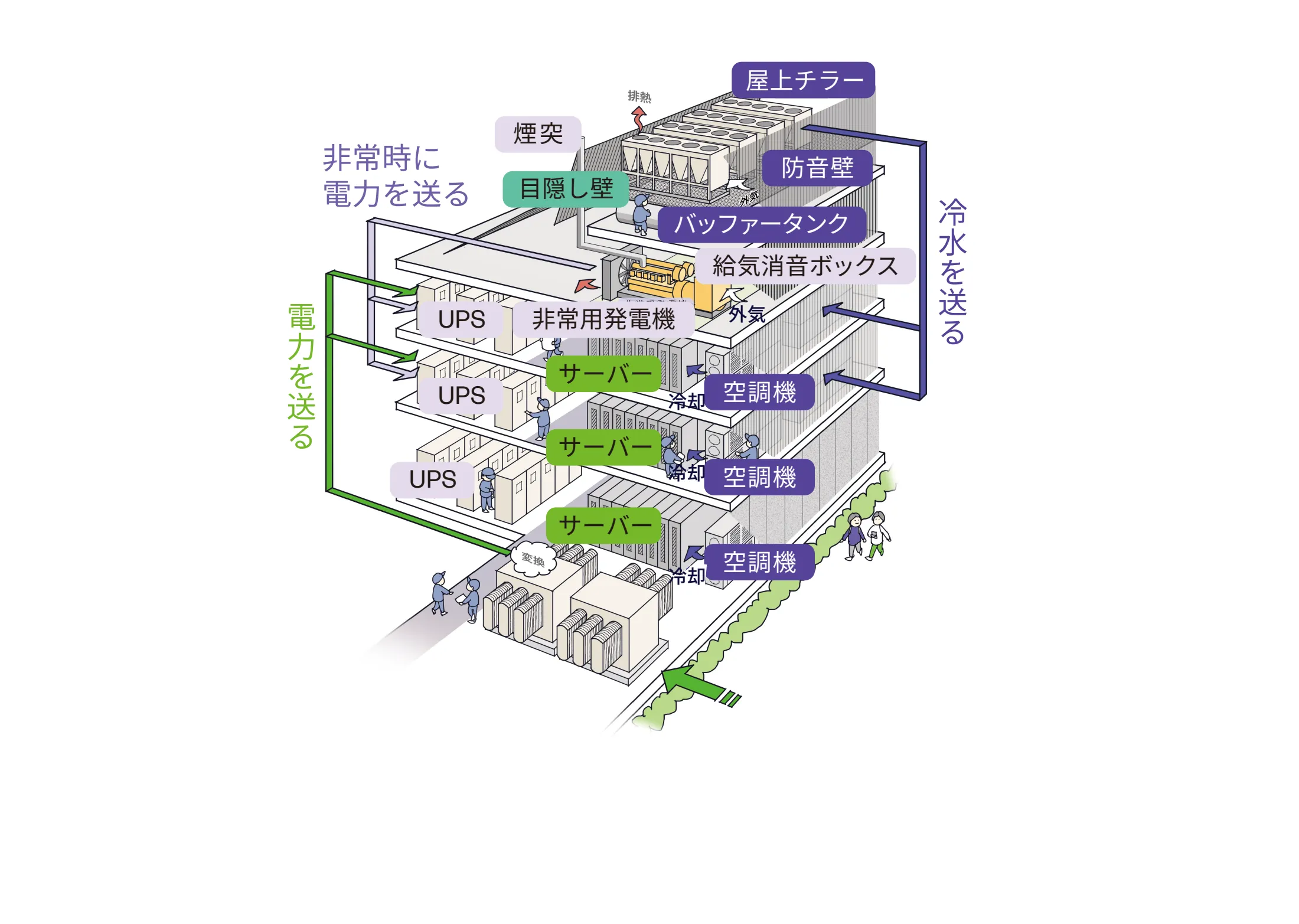
During construction
- A sound-insulating steel hoarding roughly 3 m high along the road boundary of the works area
- Managed routes and hours for construction vehicles
- Low-noise, low-vibration machinery wherever possible
- Work in principle daytime only; nights, weekends and holidays in principle avoided
- Staggered machinery use so noise does not concentrate
- No idling of vehicles or machinery
- Water spraying and material covers to prevent dust
- Noise and vibration measured periodically at the site boundary
- Advance notice of works and a dedicated contact point for residents
Once operating
- Silencers on air intakes and exhausts
- Acoustic louvres and sound walls
- Backup generators housed indoors
- Low-noise cooling fans with adjustable speeds
- Acoustic panels around transformers and pumps
- Generator test runs in daytime only
- Perimeter planting and earth banks to reduce noise
Environment and legal compliance
During construction we measure noise and vibration at the site boundary, a specialist heat study is under way, and we comply with every law and ordinance that applies. Details →
Industry guideline alignment
Goodman is a member of the Japan Data Center Council (JDCC). Below is our response to each item required by the industry's May 2026 community-coexistence guideline — prior consultation with the municipality, a single point of contact, plain-language explanation, and item-by-item disclosure.
Prior consultation with the municipality
Ongoing discussions with Tsukuba City, working towards a formal coexistence agreement. More:Prior consultation with the municipality →
A dedicated point of contact
Phone and form contact routes, plus a dedicated residents' window for the construction works. More:A dedicated point of contact →
Clear explanations
Resident briefings, roughly 12,000 flyers, personal visits, this site and Business Park tours. More:Clear explanations →
Together with the community
As a corporate citizen, Goodman values activity that connects people and place. In Tsukuba, we will contribute for the long term, supporting sport, culture and welfare, and sponsoring community events.
Goodman Business Park in Inzai has welcomed the Mayor of Tsukuba, district heads from around the site, members of the Tsukuba City Council, the Governor of Chiba and the Mayor of Inzai, reflecting the strong working relationships we build with governments and local communities.
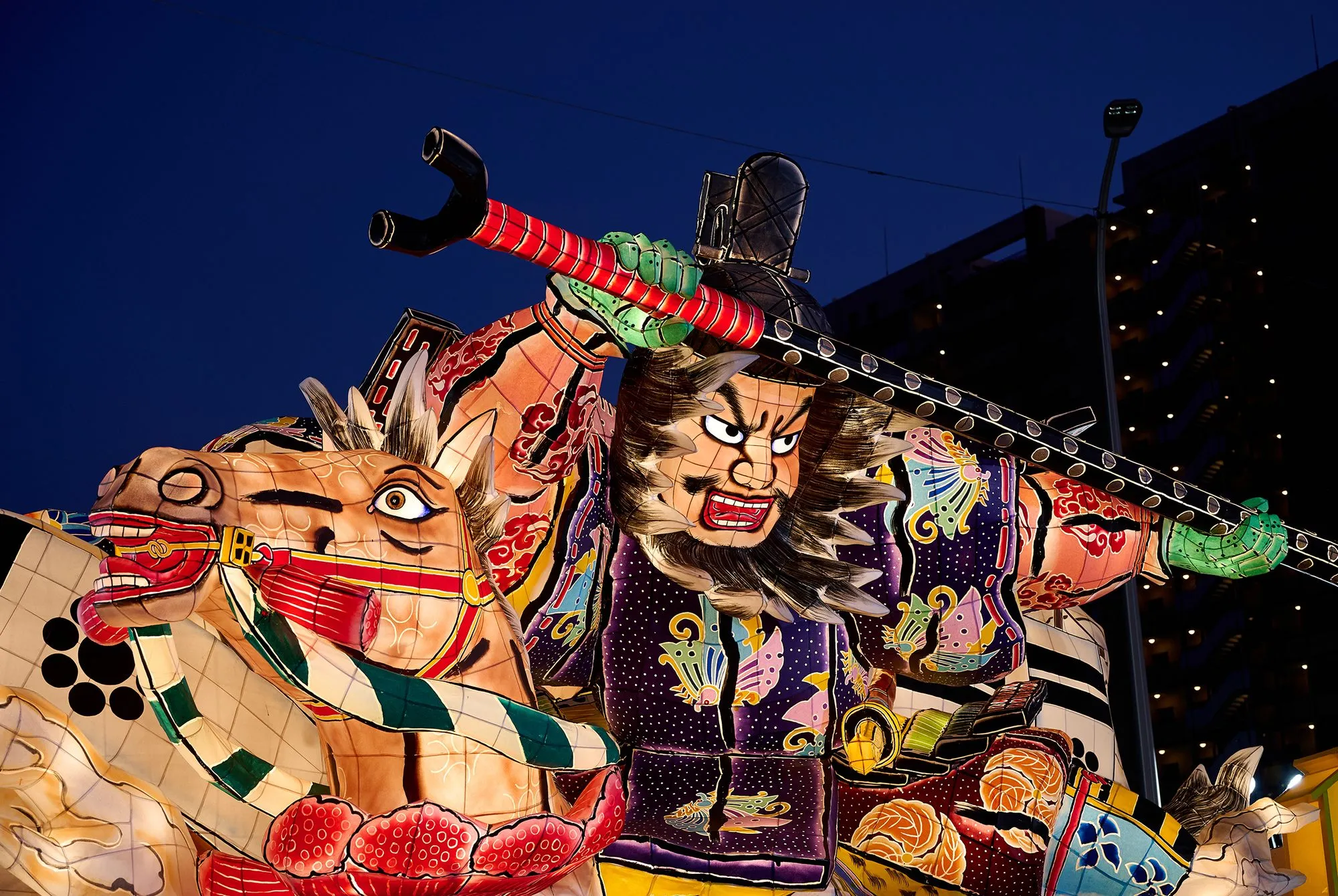
Matsuri Tsukuba 2026
Goodman is a sponsor of Matsuri Tsukuba 2026.

University of Tsukuba
We support the University's rugby club and its Sports Bureau academy program.

Goodman Foundation
The Foundation delivers meals to support children in Fukushima, Kumamoto and Hiroshima, and creates employment opportunities for people with disabilities.
At theGreen, the amenity hub of Goodman Business Park in Inzai, we have hosted many well-loved community events, with the same planned for Tsukuba.
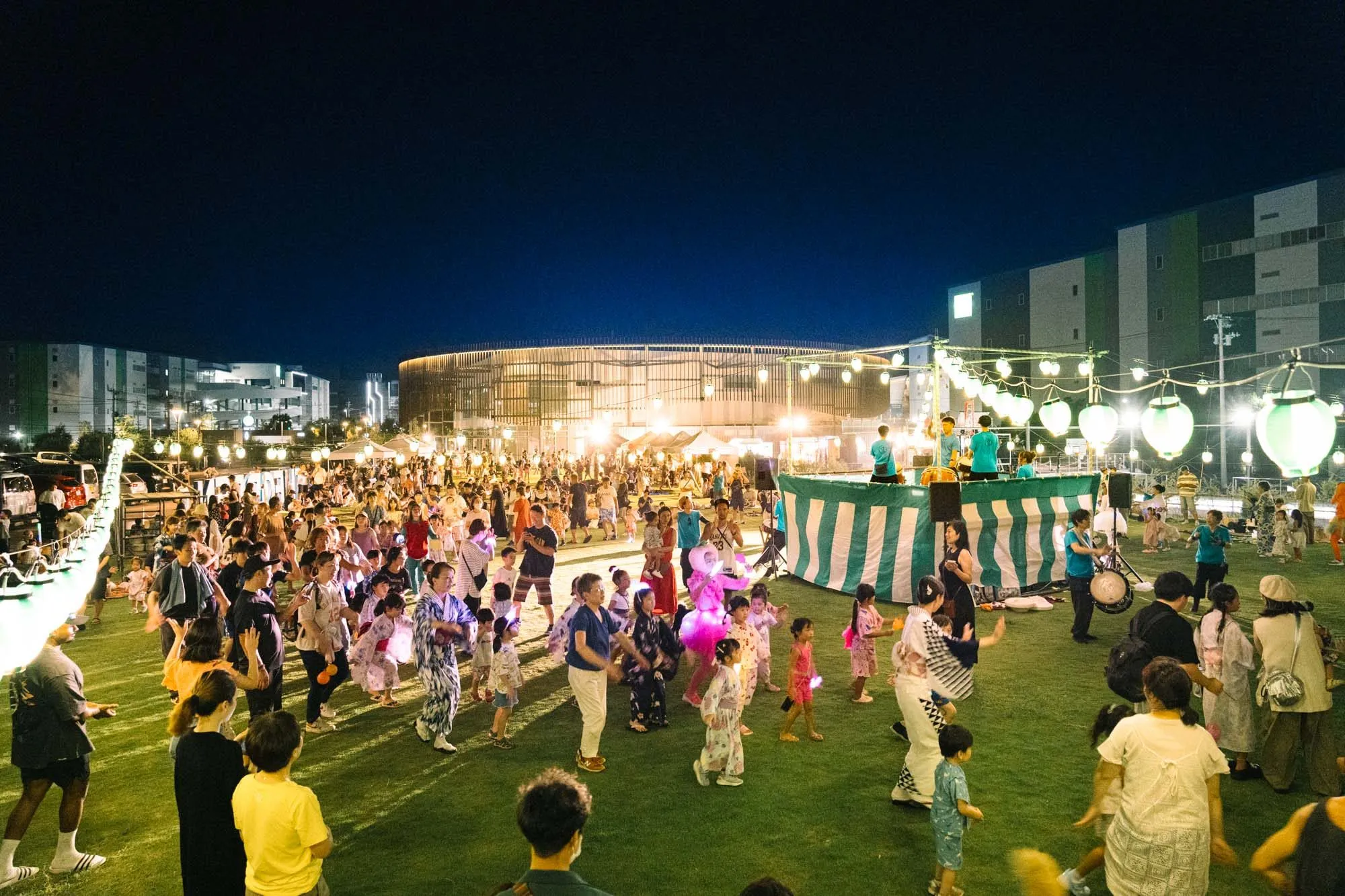


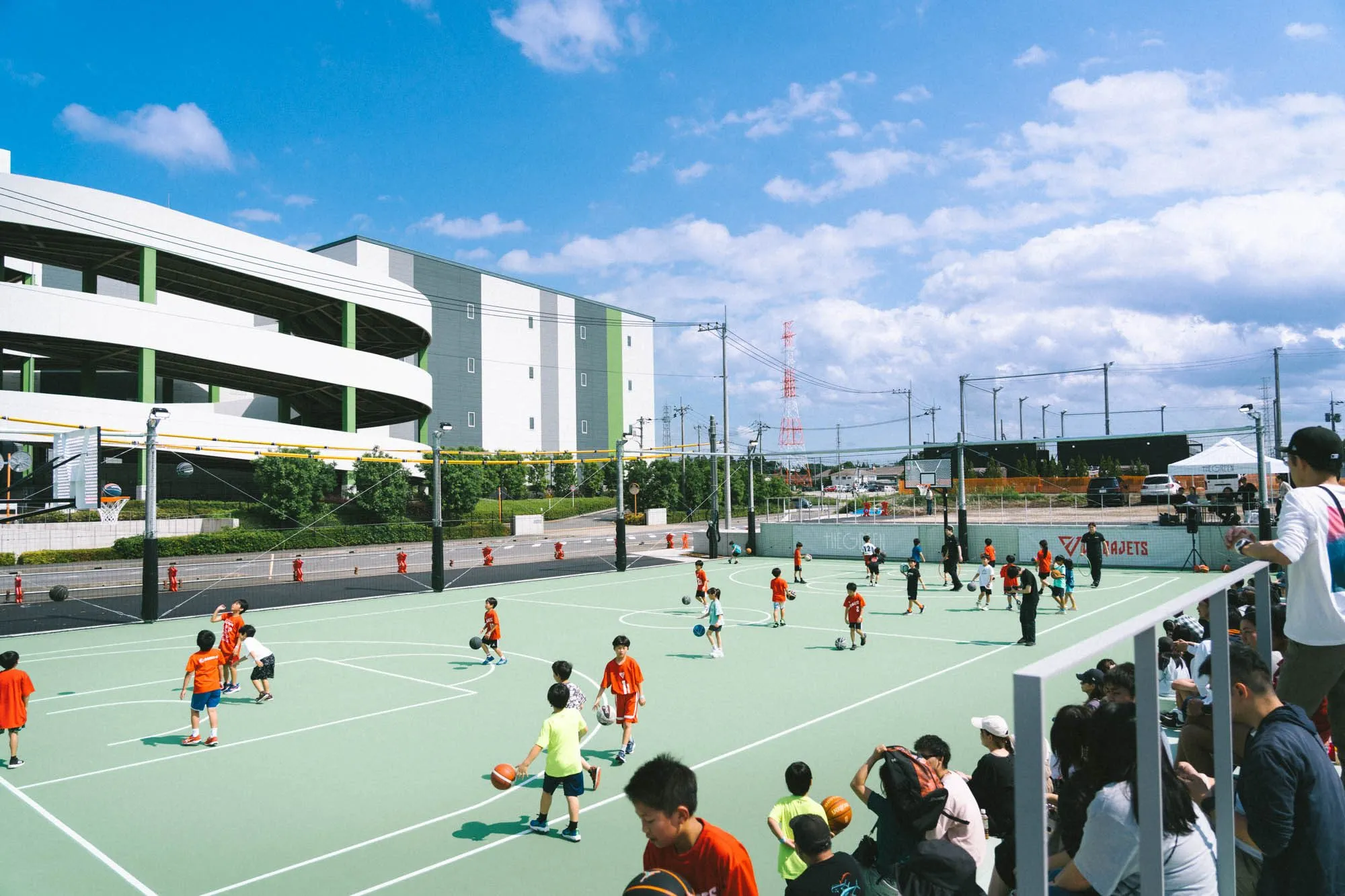
Everyday life at theGreen (video)
Scenes from events at theGreen, the amenity hub of Goodman Business Park in Inzai. This is the kind of place we will build in Tsukuba.
The videos' audio is background music only.
Contact us
We will keep valuing our connection with the neighbourhood, and keep communicating clearly as the plan progresses.
Contact us by email
info@tsukuba-tc.jp
Renders shown are concept images; the completed development may differ. About data centres and Goodman →